

Minnesota’s distinctive four-season climate presents both challenges and opportunities for residential landscaping. While the harsh winters and hot summers might seem daunting, the state’s native plant species have evolved to thrive in these exact conditions. For homeowners seeking beautiful, resilient landscapes that don’t require constant attention, Minnesota’s native flora offers perfect solutions.
Purple Coneflower (Echinacea purpurea)
The iconic purple coneflower stands as a testament to prairie resilience. With its distinctive dome-shaped center and drooping lavender-pink petals, this perennial adds vibrant color to any garden from mid-summer through fall. Beyond its aesthetic appeal, purple coneflowers require minimal maintenance once established, thriving in full sun to partial shade and tolerating Minnesota’s clay soils remarkably well.
What makes purple coneflower particularly valuable for low-maintenance landscaping is its drought tolerance. During Minnesota’s occasional dry spells, these plants continue flowering with minimal supplemental watering. They also naturally resist most pests and diseases that plague non-native ornamentals. For maximum impact, plant them in groups where their 3-4 foot height creates dramatic backdrop for shorter native species.
Little Bluestem (Schizachyrium scoparium)
For texture, winter interest, and effortless care, few plants match little bluestem grass. This prairie native grows in attractive clumps reaching 2-3 feet tall, with blue-green stems during summer that transform to a striking reddish-copper in fall. The color persists through winter, providing visual interest when most landscapes lie dormant.
Little bluestem excels in poor soil conditions where other plants struggle. Its deep root system—extending up to 5 feet below ground—allows it to withstand drought while preventing erosion on slopes. Maintenance consists simply of cutting back dead growth in early spring before new shoots emerge. Plant in full sun for best color development and structural integrity.
Wild Bergamot (Monarda fistulosa)
Also known as bee balm, wild bergamot offers multiple seasons of interest with minimal care requirements. Its lavender flowers bloom from July through September, forming shaggy, crown-like blossoms that attract pollinators in droves. Even before flowering, the aromatic foliage adds fragrant appeal to the landscape.
Wild bergamot adapts to various light conditions, from full sun to partial shade, and tolerates both dry and moderately moist soils. Unlike its cultivated cousin, this native version resists powdery mildew—a common problem in Minnesota’s humid summers. Plant in informal drifts where its 3-4 foot height can serve as a mid-border accent.
Black-Eyed Susan (Rudbeckia hirta)
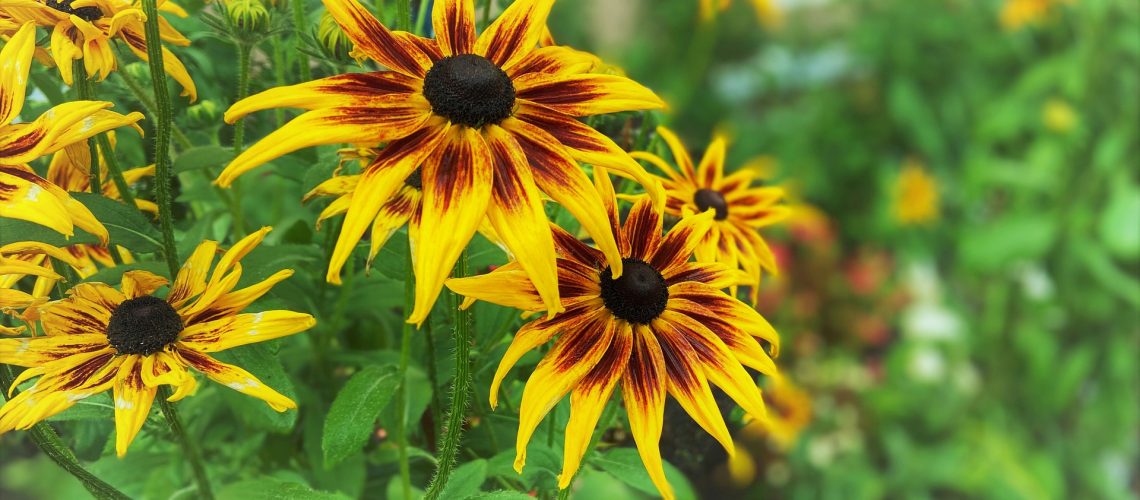
For reliable, cheerful color that requires minimal intervention, black-eyed Susan deserves a place in every Minnesota landscape. These bright yellow daisies with distinctive dark centers bloom profusely from June through September, creating masses of color that complement nearly any garden style.
While technically short-lived perennials or biennials, black-eyed Susans self-seed readily, establishing sustainable populations that return year after year without becoming invasive. They adapt to various soil types and moisture levels, though they prefer well-drained locations with full sun. Their compact 1-2 foot height makes them perfect for borders and transitional areas between lawn and taller perennials.
Red Osier Dogwood (Cornus sericea)
Not all low-maintenance plants are herbaceous perennials. Red osier dogwood, a deciduous shrub native to Minnesota’s woodland edges and wet areas, offers year-round interest with remarkable durability. While its white spring flowers and white berries provide seasonal highlights, its true standout feature emerges in winter, when its bare stems glow with intense red color against snow.
This adaptable shrub thrives in both wet and average soil conditions and tolerates partial shade, though stem color intensifies with greater sun exposure. Growing 6-9 feet tall and wide when mature, red osier dogwood works beautifully as a natural privacy screen or as an anchor in rain gardens. Maintenance is minimal—simply remove a few of the oldest stems every 2-3 years to encourage vibrant new growth.
Pennsylvania Sedge (Carex pensylvanica)
For those challenging dry shade areas where lawn grasses struggle, Pennsylvania sedge offers an elegant, low-maintenance alternative. This fine-textured, grass-like plant forms soft mounds of slender leaves reaching 8-10 inches tall. In spring, subtle flower spikes add seasonal interest before giving way to consistent, green carpeting that persists through summer heat.
Unlike many shade plants that require rich, moist soil, Pennsylvania sedge thrives in the dry, root-competitive conditions under trees where other plants fail. It spreads slowly via rhizomes to create natural drifts without becoming aggressive. Once established, it requires no supplemental watering, fertilizing, or regular cutting—perfect for those who want to reduce lawn maintenance without sacrificing an attractive landscape.
Putting It All Together
The beauty of these six native plants lies not just in their individual low-maintenance qualities, but in how well they complement each other in designed landscapes. Consider using little bluestem and purple coneflower as backdrop plantings, with black-eyed Susan and wild bergamot in mid-range positions. Red osier dogwood can provide structure and winter interest, while Pennsylvania sedge makes an excellent groundcover in shaded transition zones.
By embracing these Minnesota natives, you’ll create a landscape that not only reduces time spent maintaining your landscape, but also connects your property to the region’s natural heritage and distinctive sense of place. If you’re looking to transform your property, get in touch with the experts at Peters’ Patio & Landscape today.
