
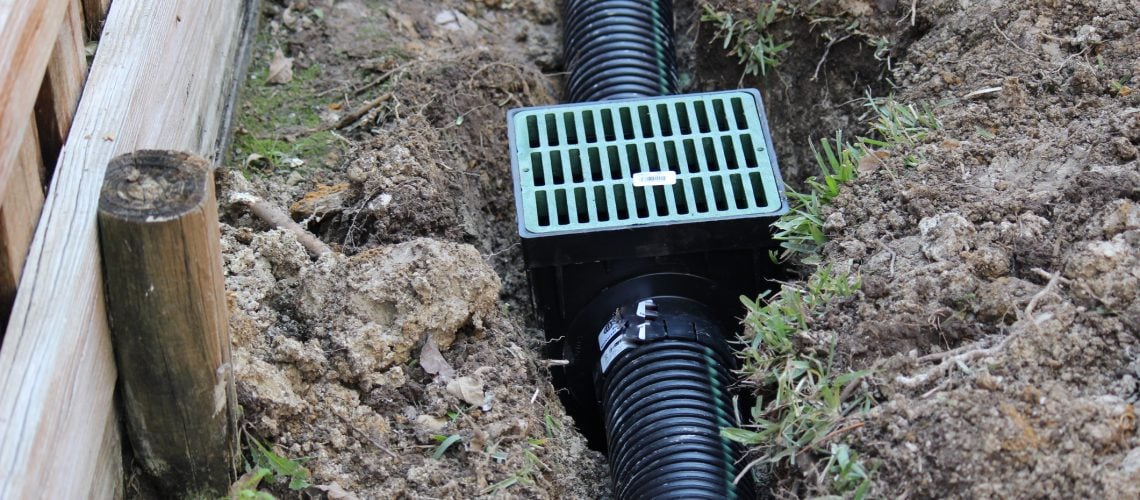

If you’re dealing with water issues on your Minnesota property, you’ve likely heard of French drains mentioned as a potential solution. These subsurface drainage systems, consisting of perforated pipes surrounded by rock, can be particularly relevant for our climate, but they’re not without their complexities.
The Benefits of French Drains
Your Minnesota property can benefit significantly from a properly installed French drain system. During our intense spring thaws, these drains efficiently channel water away from your home’s foundation, preventing costly basement flooding and structural damage. They’re especially effective at handling the substantial snowmelt we experience, which can overwhelm standard surface drainage solutions.
When properly installed, French drains work silently and invisibly, preserving your landscape’s appearance while protecting your investment. They’re particularly valuable if your yard has clay-heavy soil, common in many parts of Minnesota, which tends to retain water and create drainage issues. These systems can transform previously unusable soggy areas of your yard into functional spaces, potentially increasing your property value.
Challenges to Consider
However, installing a French drain in Minnesota comes with distinct challenges you should carefully weigh. Our harsh freeze-thaw cycles can potentially damage or displace drain pipes if they’re not installed at the proper depth – typically 3 to 6 feet deep to avoid frost line issues. Installation costs can be substantial, often ranging from $3,000 to $8,000 or more, depending on your property’s size and complexity.
Maintenance requirements deserve serious consideration. Minnesota’s deciduous trees can clog French drains with fallen leaves and roots, requiring periodic cleaning or even replacement. You’ll need to ensure the system has adequate slope for proper drainage and that it directs water to an appropriate outlet point that won’t create issues for neighboring properties or local waterways.
Winter brings its own set of challenges. While French drains can handle spring thaws effectively, they may become less efficient during winter months when the ground is frozen. This means you’ll need additional drainage solutions for surface water during winter freeze-thaw cycles.
Making Your Decision
Consider your specific situation carefully. If your property sits at the bottom of a slope, has clay soil, or regularly deals with water issues during spring thaw, a French drain might be worth the investment. However, if you’re dealing with minor seasonal puddles or have sandy soil with good natural drainage, simpler solutions might suffice.
Before proceeding, consult with local contractors who understand Minnesota’s unique climate challenges. They can assess your property’s specific needs and ensure any installation accounts for our state’s distinct seasonal patterns. Don’t forget to check local regulations – some municipalities have specific requirements for drainage systems, particularly regarding where the water can be discharged.
Revitalize Your Property With Help From Peters’ Patio & Landscape
Whether you’re looking to installa French drain for preventive measure, or your backyard routinely pools up every time it rains, contact the experts at Peters’ Patio & Landscape today to schedule a design consultation for your next project.
